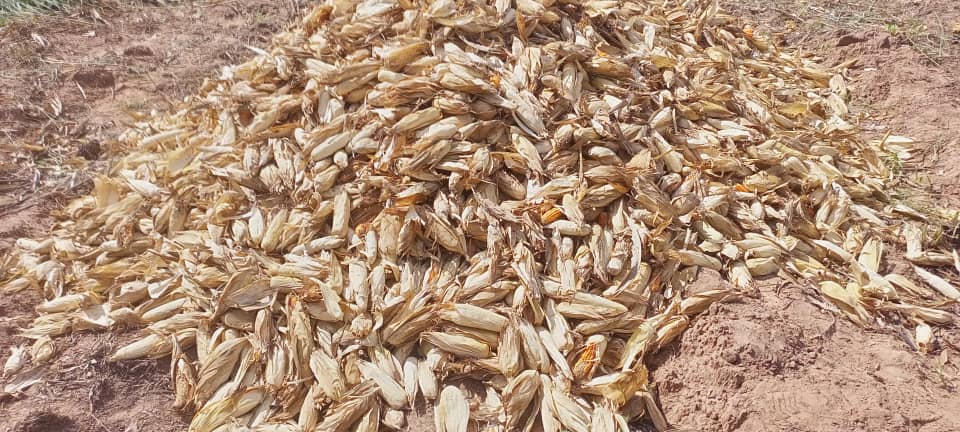
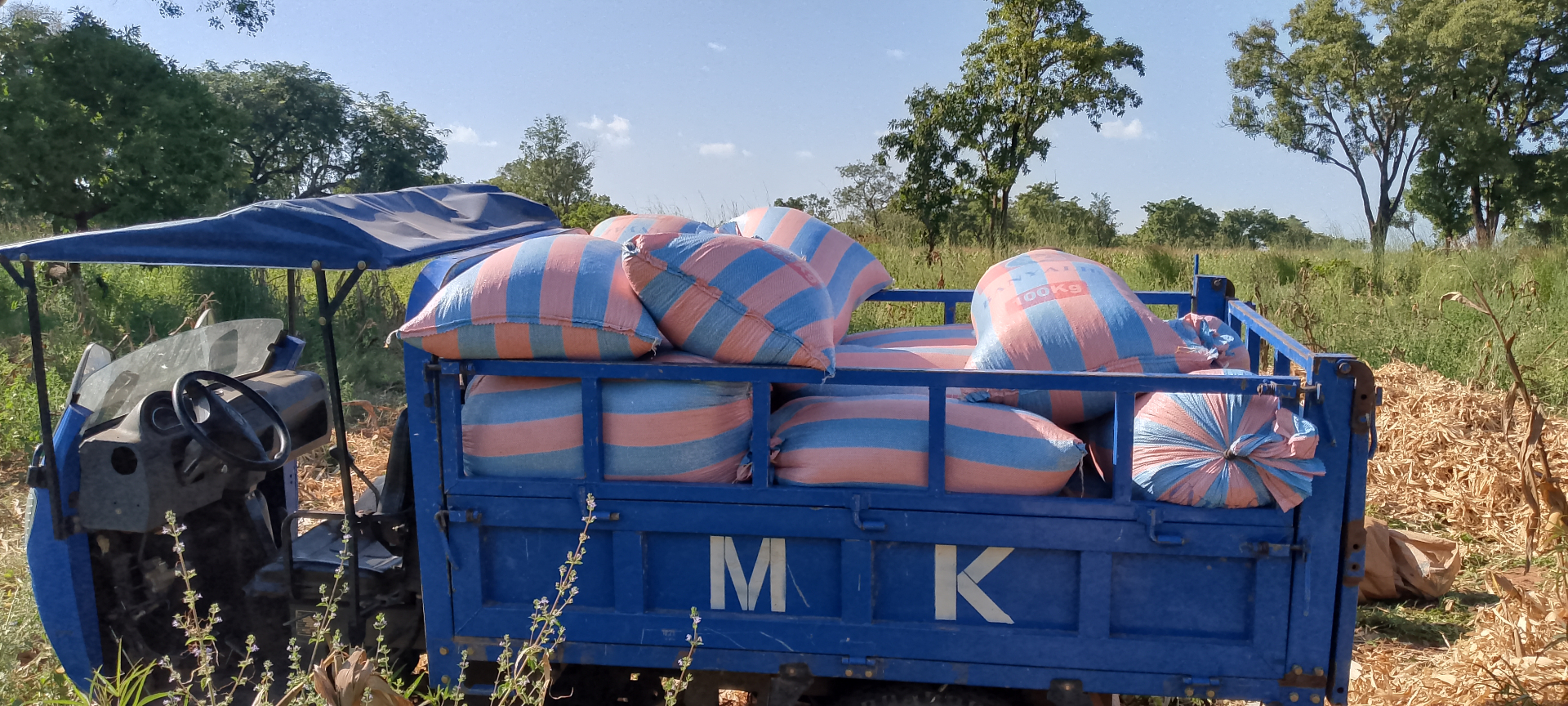
In 2024/2025, we ran a maize pilot in Damongo, Savannah Region — financing inputs directly to smallholder farmers and purchasing their harvests at maturity.
The pilot worked operationally. But it exposed a more fundamental problem.
We build structured supply systems that link smallholder farmers to institutional buyers through disciplined aggregation, quality coordination, and traceable field operations.
Building supply chains that are structured, financeable, and built to scale.
We coordinate farmers, not just commodities.
Uzman Farmer is a Ghana-based agricultural aggregation and farmer network company. Unlike informal commodity traders, we build disciplined, traceable supply systems capable of supporting institutional buyers, exporters, and agro-industrial off-takers.
Our operational model is built on direct farmer relationships, structured field coordination, and quality-assured supply delivery, creating the foundation for scalable, financeable agricultural supply chains across Ghana.
Direct relationships with smallholder farming communities, built on local trust and progressive operational formalization.
Field agents support farmer engagement, quality monitoring, sourcing coordination, and aggregation supervision on the ground.
Coordinating commodity collection, consolidation, and movement from farming communities to buyers and fulfillment points.
Building systems for quality consistency, sourcing records, inventory visibility, and traceability to support institutional buyers.
We concentrate on crops with strong aggregation and market potential, particularly those where structured sourcing and quality consistency create long-term commercial value.
We identify sourcing communities and aggregation points, then engage farmers and local sourcing partners through relationship-based coordination.
Coordinate sourcing activities, aggregate produce at collection points, and conduct preliminary quality inspections before consolidation.
Rigorous moisture assessment, variety verification, and impurity checks. Rejected or off-spec stock is segregated before any movement.
Record commodity volumes, track stock movement, and coordinate warehousing and temporary storage at aggregation points.
Coordinate transportation from sourcing communities, dispatch to fulfillment points, and confirm delivery records with buyers.
Volume, quality, and financial reconciliation with full operational reporting, generating the data that supports financing and future scale.
We are currently active in the Savannah, Oti, and Volta regions, with proposed expansion into the North East, Upper West, and Upper East regions for sesame aggregation. Our target network is 2,000 to 5,000 smallholder farmers.
Specific pilot sourcing locations are determined based on commodity quality requirements, logistics feasibility, buyer specifications, and aggregation efficiency.
Scalable aggregation increasingly depends on operational visibility, traceability, and reliable field data. We are developing structured systems that make our supply chains transparent to institutional buyers and financing partners alike.
In 2024/2025, we ran a maize pilot in Damongo, Savannah Region — financing inputs directly to smallholder farmers and purchasing their harvests at maturity.
The pilot worked operationally. But it exposed a more fundamental problem.
We had assumed access to financing was the primary constraint facing smallholder farmers. What we discovered was that market access was the deeper failure. A farmer who secures financing, plants, and harvests a good crop is still exposed — if buyers are absent at the point of sale, he risks selling at distressed prices, watching his harvest spoil while waiting for demand that never arrives, defaulting on input loans with no revenue to cover them, and exiting farming altogether having lost an entire season's investment.
Financing without a guaranteed market does not de-risk farming. It defers the risk.
That realisation drove a full model redesign. We stopped leading with input financing and started leading with buyer demand. No farmer is mobilised until off-take is secured. The result is a supply system built around confirmed demand.
The cayenne pepper programme in Juapong and the sweet potato programme in Kedjebi are the direct output of that redesign. The same model applies to any crop an institutional buyer, agro-processor, or exporter is ready to commit to.

Onboarding, 2024/25 — farmers register and sign on at the village mobilisation stage.
The maize pilot ended. The model it produced didn't. Field experience and farmer relationships built during that season are what made our current crop programmes possible. Every new programme starts the same way, with a signed offtake agreement before a single farmer is mobilised.
Uzman Farmer aims to become a leading aggregation and supply coordination company in West Africa, transitioning agricultural aggregation from fragmented informal trading into a data-driven, financeable supply ecosystem that works for farmers and buyers alike.
Reliable market linkages that move smallholder farmers from subsistence pricing to structured commercial relationships.
Institutional buyers and agro-industrial off-takers need consistent, quality-assured supply, not spot-market uncertainty.
Building aggregation systems capable of meeting international quality standards and traceability requirements for export markets.
Whether you are a buyer looking for reliable supply, a financing partner, or an organisation seeking structured aggregation capability in Ghana, we would like to hear from you.